How to Ask for Something in Japanese Without Sounding Like an Order
ください comes from an imperative, so ご確認ください is closer to "check this" than to "please check." Here is the request ladder, with romaji.

You learned that adding ください makes a sentence polite. That is roughly true when you are asking a shop assistant for a bag. It stops being true the moment you write to a client.
「ご確認ください」 (gokakunin kudasai) lands closer to "check this" than to "could you take a look". Nothing about it is rude, exactly. It is simply an instruction wearing polite clothes, and if you send instructions to people who outrank you, they notice. Most people who write good Japanese emails are not using more polite words than you. They're using a different grammatical shape, and it's a shape nobody teaches on the way to N2.
This guide gives you that shape: why ください behaves the way it does, a ladder of request forms from casual to formal with romaji, the cushion phrases that buy you room, and two mistakes that quietly cancel out everything else you did right.
What you will get from this guide
- ください descends from an imperative. It directs rather than asks.
- Real requests are built from いただく, not from ください.
- Negative questions sound softer because they leave the other person room to decline.
- Two common patterns undo your politeness: 「ご確認していただく」 and stacked 「させていただく」.
Why ください is not "please"
English "please" is a softener you bolt onto a command, and it works on almost anything. ください is not that. It comes from くださる (kudasaru), the respectful form of くれる (kureru, to give to me), and the form you attach to a verb is an imperative one.
So 「送ってください」 (okutte kudasai) parses as something like "give me the act of sending". It is polite about the giving. It is still telling someone to do it.
That distinction rarely matters downward or sideways. It matters a great deal upward, where a direct instruction from a junior reads as someone who has not noticed the gap.
The request ladder
Requests in Japanese sit on a scale, and the moves up that scale are structural rather than lexical. Each step below is a real grammatical change, not a politer synonym.
| Form | Romaji | Reads as | Use with |
|---|---|---|---|
| 確認して | kakunin shite | Check it | Close friends only |
| 確認してください | kakunin shite kudasai | Check this | Peers, juniors, instructions |
| 確認していただけますか | kakunin shite itadakemasu ka | Could you check this? | Seniors, most colleagues |
| 確認していただけませんか | kakunin shite itadakemasen ka | Would you mind checking? | Seniors, clients |
| ご確認いただけますでしょうか | gokakunin itadakemasu deshou ka | Might I ask you to check? | Clients, first contact |
| ご確認いただけますと幸いです | gokakunin itadakemasu to saiwai desu | I would be grateful if you could check | Clients, written only |
Three things are worth noticing in that table.
The pivot happens at step three, where ください is replaced by いただく (itadaku, to receive, humbly). You stop directing the action and start receiving a favour. That single swap does more for your tone than any amount of vocabulary polishing.
Steps five and six exist mostly in writing. Say 「ご確認いただけますと幸いです」 out loud in a stand-up meeting and you will sound like you are reading a letter, because you are.
And you can overshoot. Sending step six to the colleague sitting next to you creates distance, not respect. Formality that outruns the relationship reads as coldness or, worse, as sarcasm.
Cushion phrases buy you room
Before the request itself, Japanese business writing puts a short phrase that acknowledges the imposition. These are クッション言葉 (kusshon kotoba, cushion words), and skipping them is one of the most visible gaps in otherwise competent Japanese.
| Cushion | Romaji | When it fits |
|---|---|---|
| 恐れ入りますが | osore irimasu ga | General purpose, safe everywhere |
| お手数をおかけしますが | otesuu o okake shimasu ga | The task takes real effort |
| ご多忙のところ恐縮ですが | gotabou no tokoro kyoushuku desu ga | They are visibly busy |
| 差し支えなければ | sashitsukae nakereba | They may have a reason to say no |
Put together, a full request looks like this:
恐れ入りますが、添付資料をご確認いただけますでしょうか。 Osore irimasu ga, tenpu shiryou o gokakunin itadakemasu deshou ka. Sorry to trouble you, but might I ask you to look at the attached document?
The cushion is not decoration. It is the part that says you know you are taking their time.
Why the negative question sounds softer
「いただけますか」 and 「いただけませんか」 both translate as "could you". The negative version is softer, and the reason is worth understanding rather than memorising.
A negative question presents refusal as an available answer. It says "I assume you might not be able to" and leaves the door open. A positive question assumes yes and quietly closes it. Japanese business language treats leaving that door open as courtesy.
The same logic explains 「〜いただけますと幸いです」. It does not ask a question at all. It states that you would be glad, which means no answer is technically required and the other person is never cornered.
Asking for a deadline without pressing
Deadlines are where polite requests most often collapse back into instructions, because the date itself feels like a demand. The fix is to attach the date to your own convenience rather than to their obligation.
恐れ入りますが、金曜日までにご返信いただけますと助かります。 Osore irimasu ga, kinyoubi made ni gohenshin itadakemasu to tasukarimasu. Sorry to trouble you, but it would help me if you could reply by Friday.
「助かります」 (tasukarimasu, it helps me) frames the deadline as your need. Compare 「金曜日までにご返信ください」, which frames it as their duty. Same date, completely different relationship.
If the deadline is genuinely hard, say so plainly and give the reason. Softening a real constraint until it sounds optional is not politeness. It is just unclear, and unclear is worse.
Two patterns that cancel your politeness
「ご確認していただく」 is broken
This one shows up constantly, including from people who write otherwise excellent Japanese.
ご確認いただけますでしょうか。 (correct) ご確認していただけますでしょうか。 (broken)
The prefix ご already carries the polite construction, so adding して duplicates the work. Either 「ご確認いただく」 or 「確認していただく」 is fine. The hybrid is not.
Stacked 「させていただく」
「させていただく」 (sasete itadaku) means roughly "I will humbly be permitted to". It is correct when you genuinely need permission, and it has become a verbal tic when you don't.
確認させていただきます。 (fine: you are handling something of theirs) 参加させていただきます。 (fine: you were invited) 説明させていただきます。 (thin: nobody granted you anything)
Japan's Agency for Cultural Affairs addresses this pattern directly in its keigo guidelines, noting that the form fits when the action involves the other party's permission or benefit (文化庁, 報告・答申・建議等). Where neither applies, plain 丁寧語 is stronger. Three of these in one paragraph and you sound apologetic about existing.
Where to go from here
The request ladder is learnable in an afternoon. Picking the right rung under time pressure, for this recipient, in this channel, is the part that takes months, and there is no shortcut through it that I know of.
If the categories behind these forms are still fuzzy, the complete keigo guide covers 尊敬語 and 謙譲語 properly, including why いただく belongs where it does. If you want the greeting that opens the message before the request, お疲れ様です and お世話になっております sorts that out.
Veltone picks the rung for you. Say who you are writing to and how formal you need to be, and it selects the request form, the cushion phrase and the closing together, then explains what the phrases it highlights are doing. Reading that on your own messages is how the ladder stops being a table you look up.
Get the tone right, every time.
No credit card required. Start with three translations a day.
You may also like
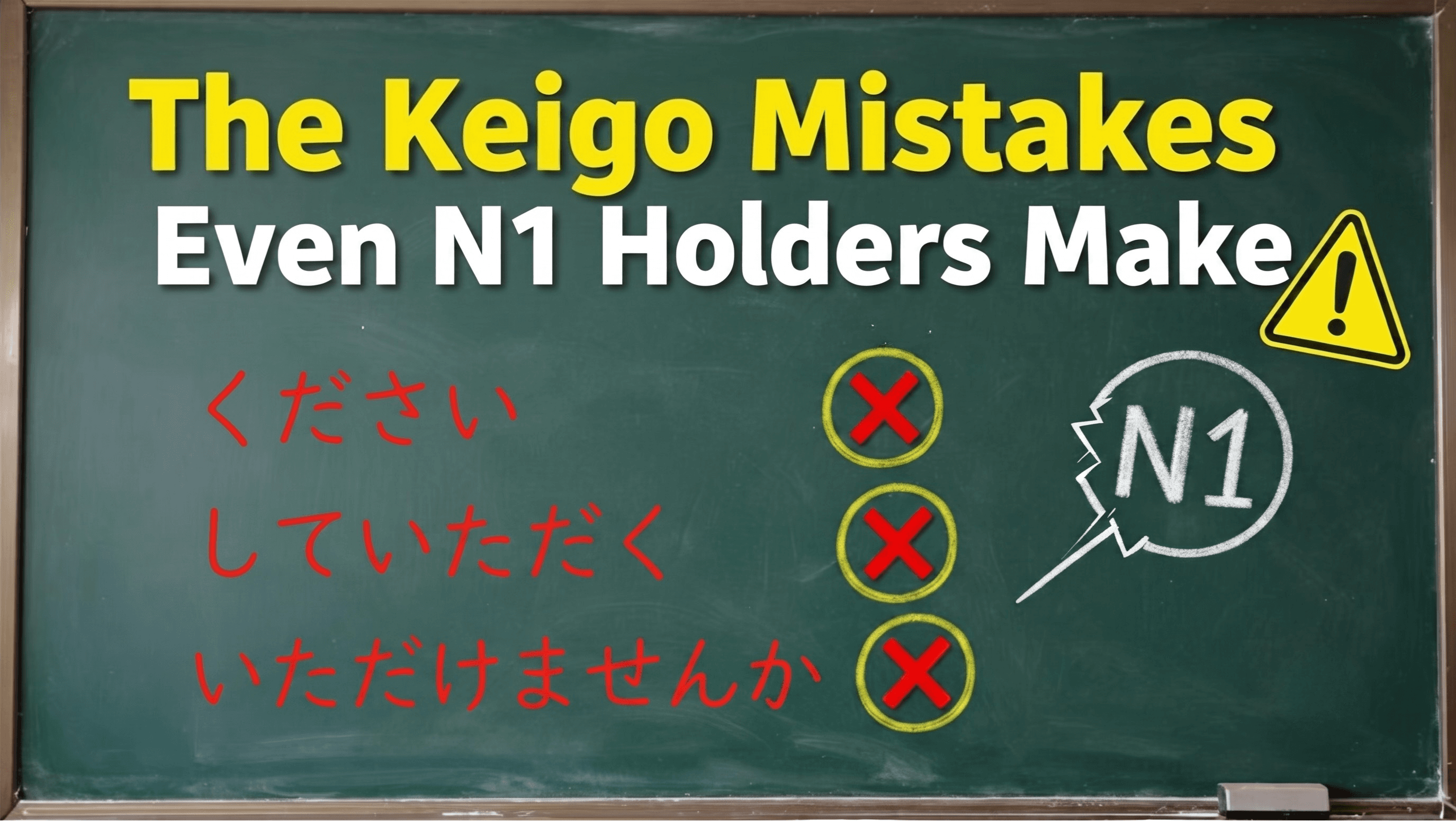 japanese, keigoThe Keigo Mistakes Even N1 Holders MakeThe JLPT has no speaking or writing section, so N1 certifies reading and listening. Here are the keigo errors that survive it, and two that are not errors.
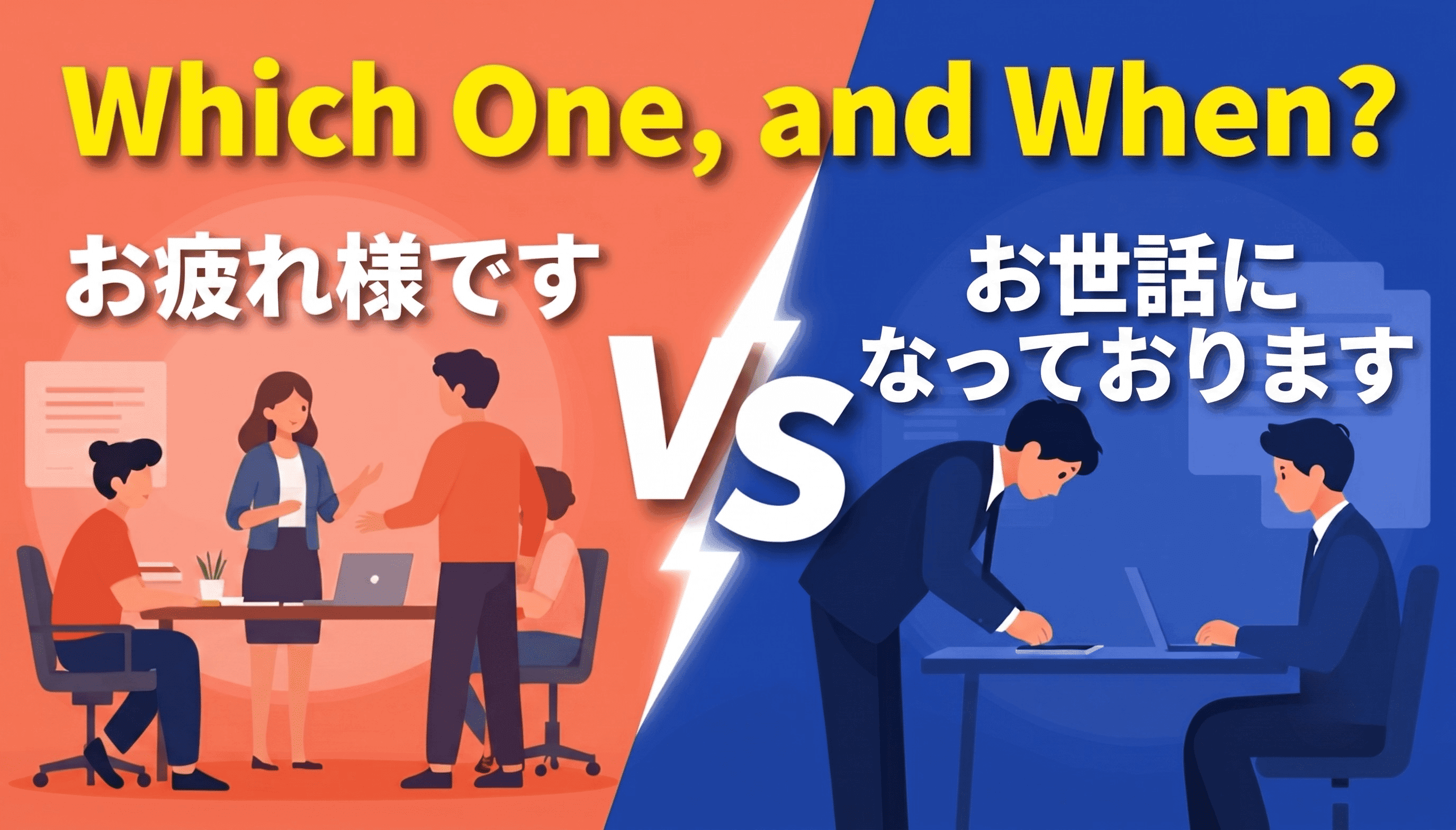 japanese, keigoお疲れ様です vs お世話になっております: Which One, and WhenOne is for people inside your company, one is for everyone outside it. Mixing them up is the fastest way to sound new. Here is the line, with romaji.
 japanese, keigoJapanese Keigo: The Complete Guide for ProfessionalsKeigo has five categories, not the three most guides teach. Here is what each one does, the group rule that overrides rank, and a verb table with romaji.